


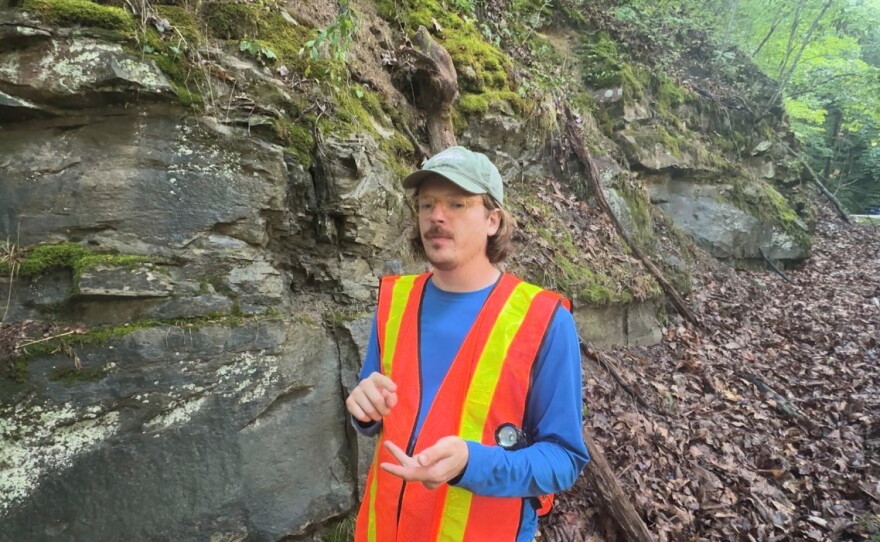
A slight breeze and a few raindrops greet us as we begin hiking up a mountain in Letcher County.
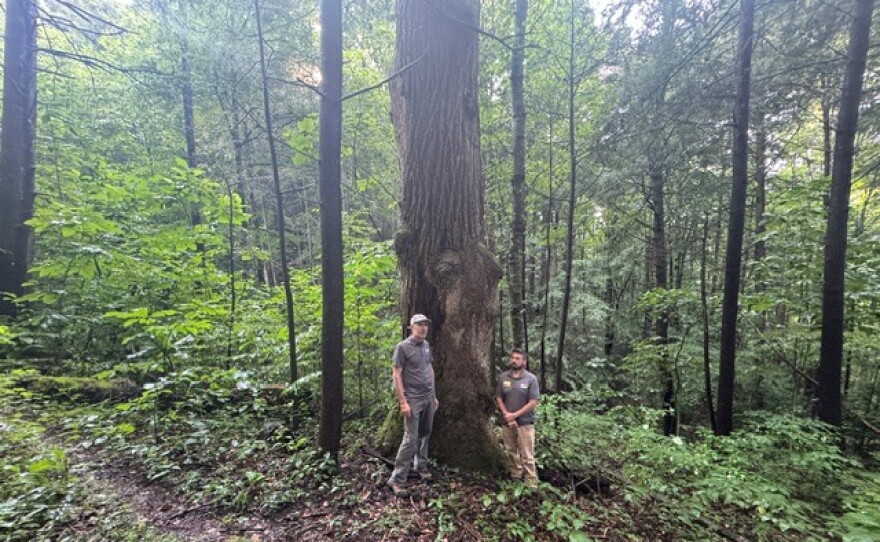
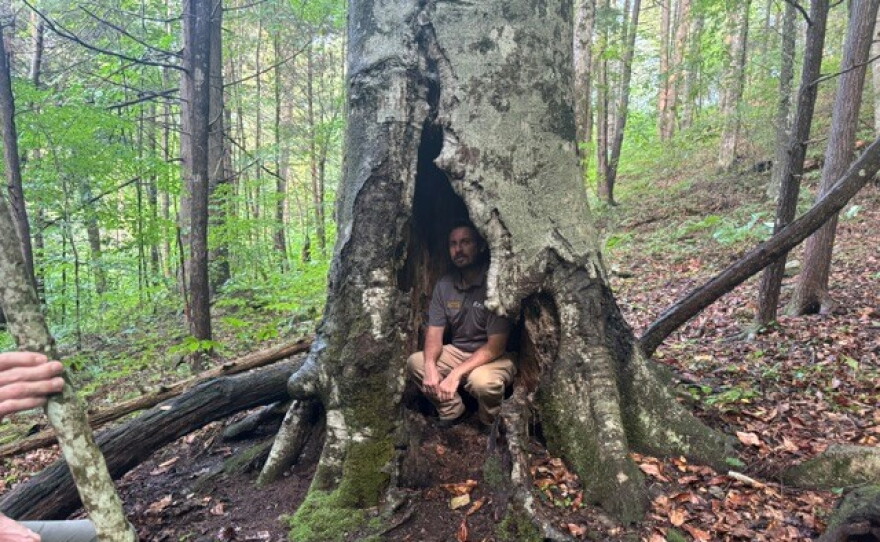
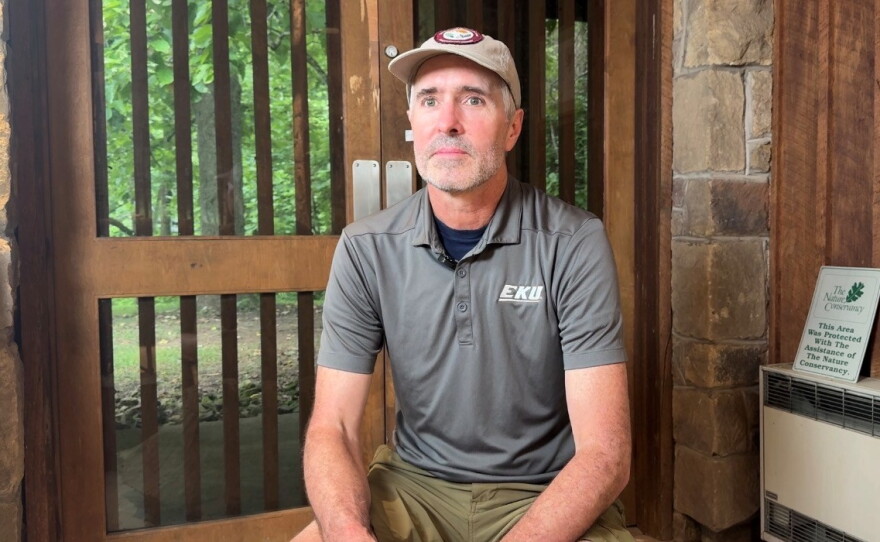
Right away, we notice unusually large trees, hemlocks, chestnut oaks, and an American Beech. David Brown knows this forest well. He’s a professor of biology at Eastern Kentucky University and the Interim Director of Natural Areas.
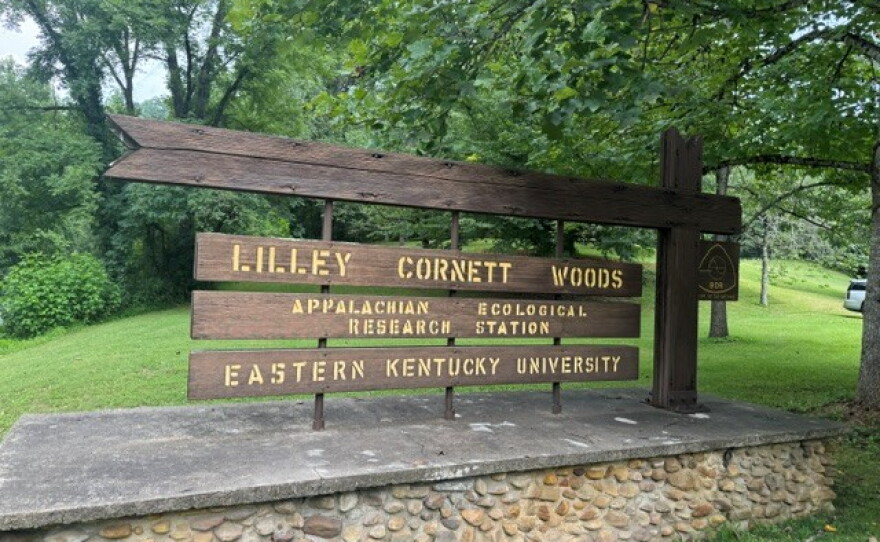
We are walking through Lilley Cornett Woods. “It's one of four of our natural areas. We actually have three others: Maywoods and Taylor Fork Ecological Area and an area called Cardinal Lane Outdoor Area. But Lilley Cornett is really the crown jewel. It's an old-growth forest, which is exceedingly rare. There are very little old-growth forests left in the eastern US and really anywhere in the US, including here in Kentucky.”
Lilley Cornett Woods is over 600 acres of forest, owned and managed by EKU. Some of the trees are 300 years old.
“An old-growth forest means it's never been harvested and completely cut over. So, there are other terms that people sometimes use, like virgin forest, but it's not truly pristine because there are impacts in the form of, you know, climate change and invasive species of plants and animals and diseases that end up impacting the area. And so, it's not truly pristine, but it's never been like cut over and harvested.”
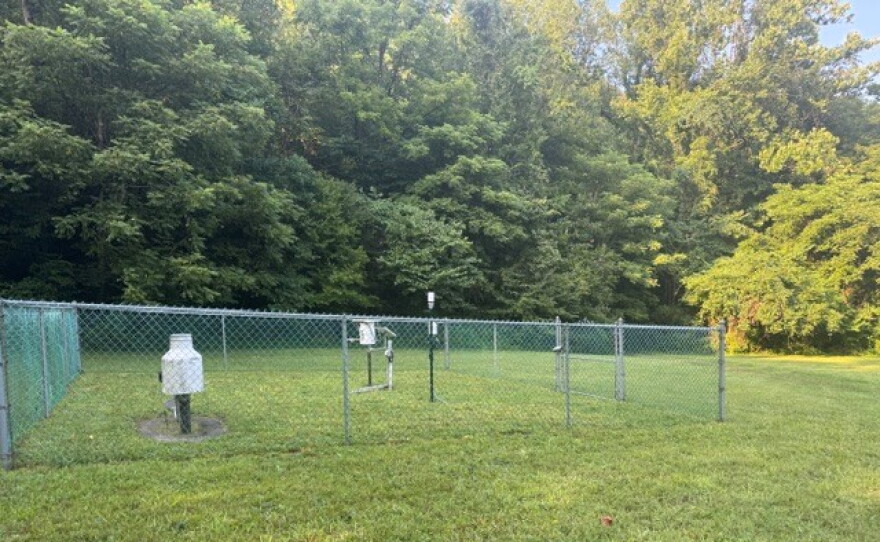
Lilley Cornett Woods serves as a research center and an outdoor classroom for students.
“We bring students, and we train them here, whether they're grad students; many of them are from EKU, Eastern Kentucky University, but also students from other universities that use this site along with their mentors or professors to conduct ecological research.”
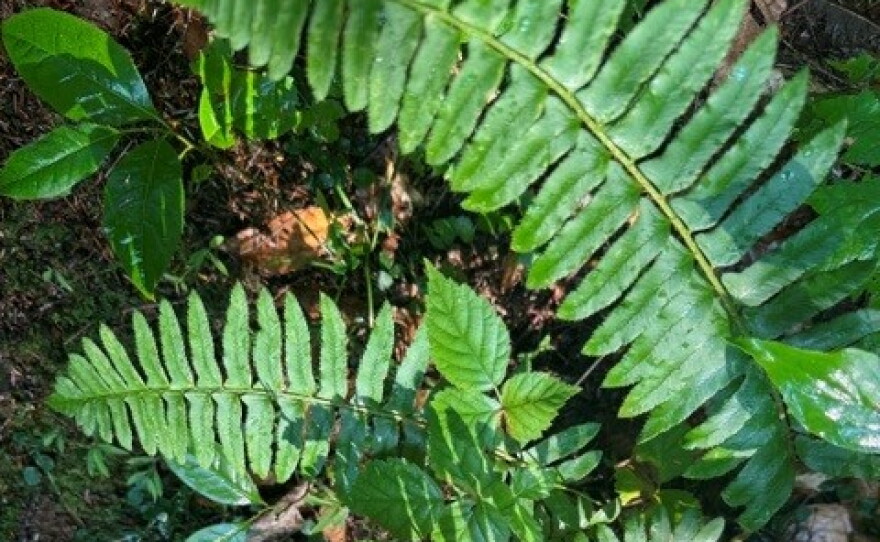
Hiking with us is Robert Brown, who is the Manager of Lilley Cornett Woods. “We are in the old growth now. This is an old-growth, mixed mesophytic forest. So, a mesophyte is a plant that's dependent on cool and moist conditions. We have sycamores down low where it's really wet, whereas up high on the ridge, we'll have chestnut oaks where it's really dry. So different species prefer different moisture levels.”
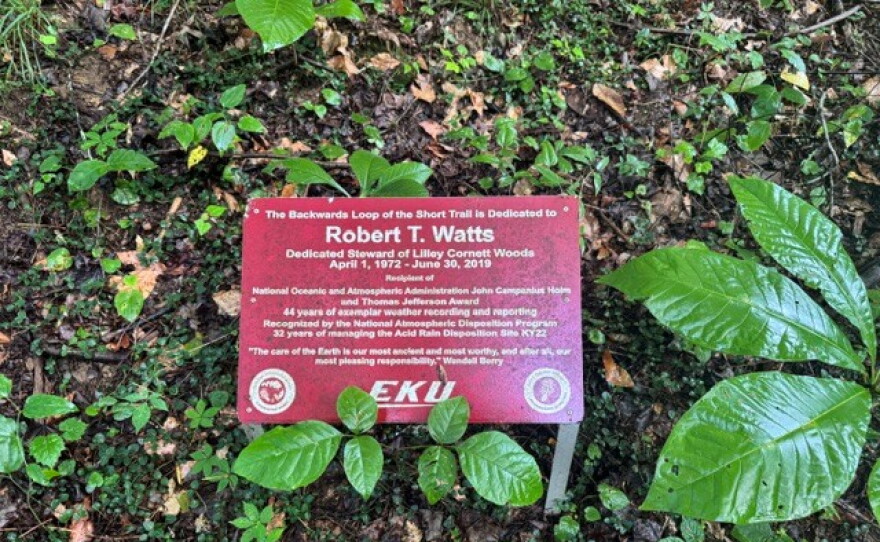
Robert Brown grew up in Letcher County and lives on the Lilley Cornett Woods property near the visitor center. How does he describe this forest to newcomers? “We have so many flowering plants and ferns and species, amphibians, creatures, critters out in the woods that they are going to love to see, whether you're an adult or a kid. It's a fun place to see, and I think the perfect answer if you could only just sum it up into one word for a question like that is that Lilley Cornett Woods is a living museum. We have these woods that is stuck in time, and so it is essentially like a time capsule and acts as a living museum because of that fact.”
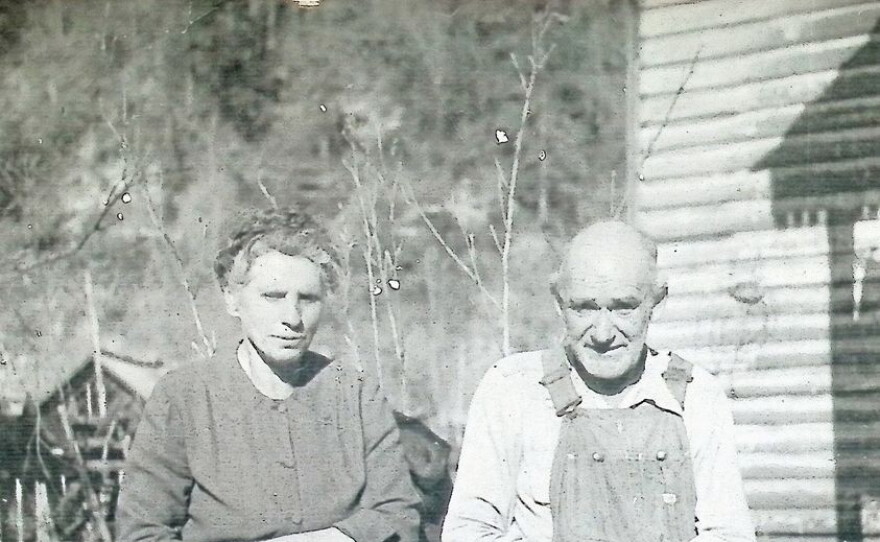
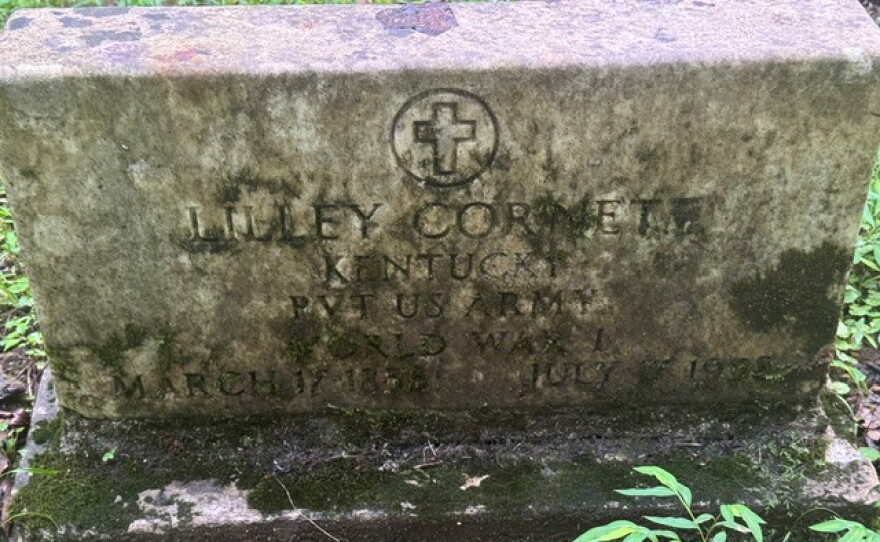
One man is largely responsible for this natural wonder. Lilley Cornett was a coal miner and farmer who began buying land in the forest in the 1920s. He protected the woods from logging.
Robert Brown says, “Lilley Cornett loved his woods. He would be out walking his property and taking care of it and sometimes staying out overnight, just watching the forest and making sure it was protected. He was an outdoorsman who just loved being outside all the time. He would sometimes use his own money to pay other locals in the community to help him keep an eye on the place during the hot season when there could be wildfires that would break out. He was ardent about keeping it from being logged and having the old timber cut down.”
Cornett died in 1958 and is buried in the woods that carry his name. The state of Kentucky bought Lilley Cornett Woods in 1969 and then transferred the property to Eastern Kentucky University for research.
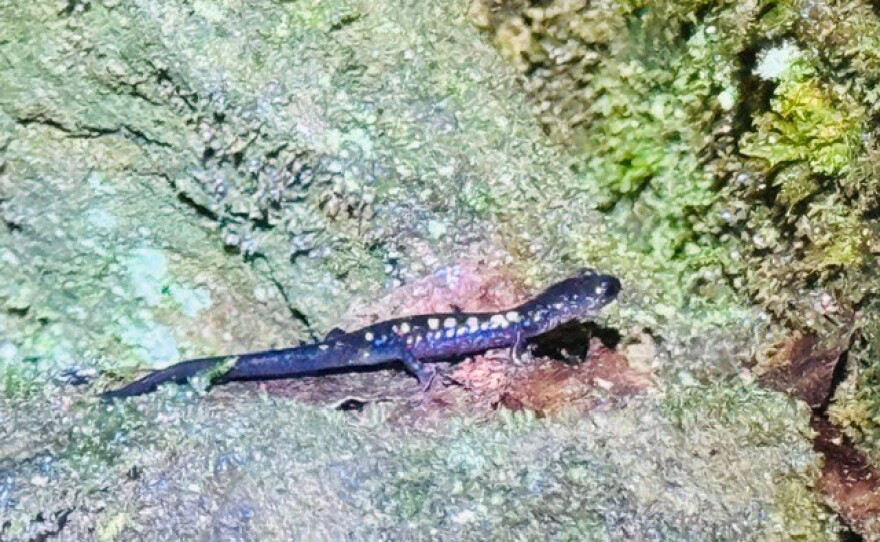
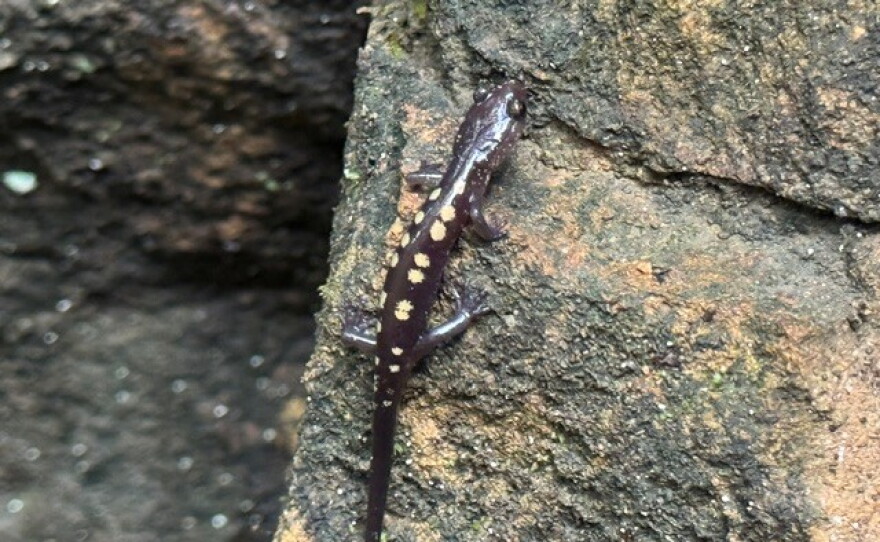
This year, two of David Brown’s students from EKU have used Lilley Cornett Woods for a Master’s project involving a rare species of salamander. EKU grad student William Taylor, with the help of sophomore Tristan Richardson, is looking for the Yellow Spotted Woodland Salamander.
Williams explains, “This project is funded from the Kentucky Department of Fish and Wildlife. It's part of an assessment of the Yellow Spotted Woodland Salamander because it was petitioned for the Endangered Species Act list. So, we're assessing the species to see how healthy it is in Kentucky to then report back. Our goal is to find out the distribution of the salamander in the state, because right now, there's a rough distribution, but we're trying to make it clearer.”
For the last several months, Williams and Richardson have travelled throughout Eastern Kentucky searching for the salamander that is no more than five inches long and spends most of its time underground.
“Like you'll go hiking, you'll never see one. But there are hundreds of them. They mostly spend their lives underground, so they're under your feet. There are hundreds of them within just a few meters, and that's so cool. They have so many neat color patterns.”
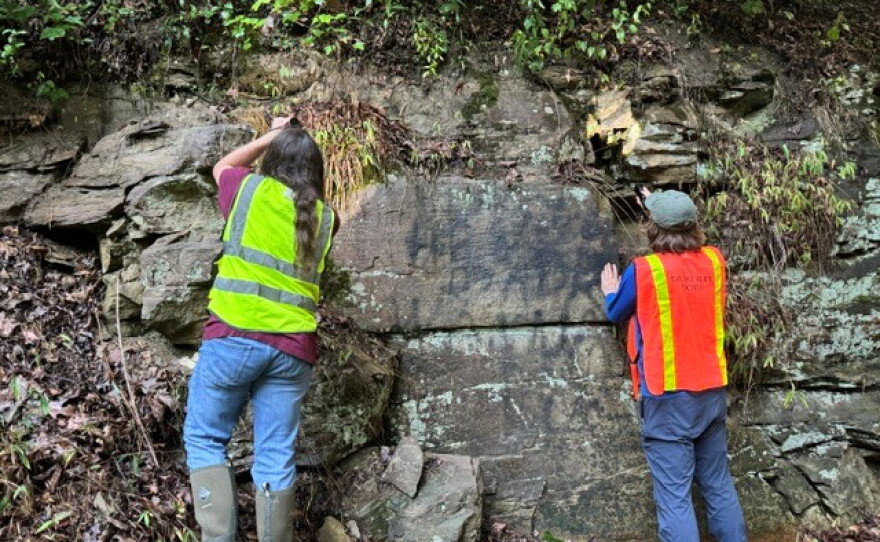
The students use flashlights as the sun goes down to scan rock crevices and ledges.
Richardson enjoys the search. “Sometimes the crevices are up pretty high, and I have to like maneuver my way up there and climb up, but that's what I do for the most part. I spend most of my time while out here just looking for them because you know, they can be in these crevices, and they can be pretty hard to spot a lot of the time.” Being a part of William’s research is gratifying. “I feel very lucky. I feel incredibly, you know, fortunate to be able to be part of this cause it is something that is very important, you know, possibly getting another species listed on the endangered species list, getting more protection is always a great thing, and I'm very happy that I get to be a part of it, even if it's not, you know, the biggest part. I'm so glad that I get to be here.”
A century after Lilley Cornett bought and protected these woods, students like Williams and Richardson are reaping the benefits.
Williams is enjoying the experience and the natural beauty. “It is a lot of fun. I feel really lucky to be able to be out there. I love being out there at like two in the morning driving these roads. Some people are like; I wouldn't drive those roads. I'm like, I love it. I love it, and it's just so much fun to be out seeing all these animals that most people don't get to see.”
Their professor, David Brown, appreciates what Lilley Cornett Woods means for the future of his students.
“Lilley Cornett Woods as a training ground for students, I think it's important for people to make that connection that these protected areas provide a resource for future conservation professionals to learn the skills that they need to protect the resources, including salamanders and the old trees that they live with.”
Lilley Cornett Woods is open to the public on a limited basis depending on the season. Robert Brown gives pre-arranged tours, and the visitor center is open as well during certain months. Visitors should call the EKU Division of Natural Areas to plan a tour.
** WEKU is working hard to be a leading source for public service, fact-based journalism. Monthly sustaining donors are the top source of funding for this growing nonprofit news organization. Please join others in your community who support WEKU by making your donation.
