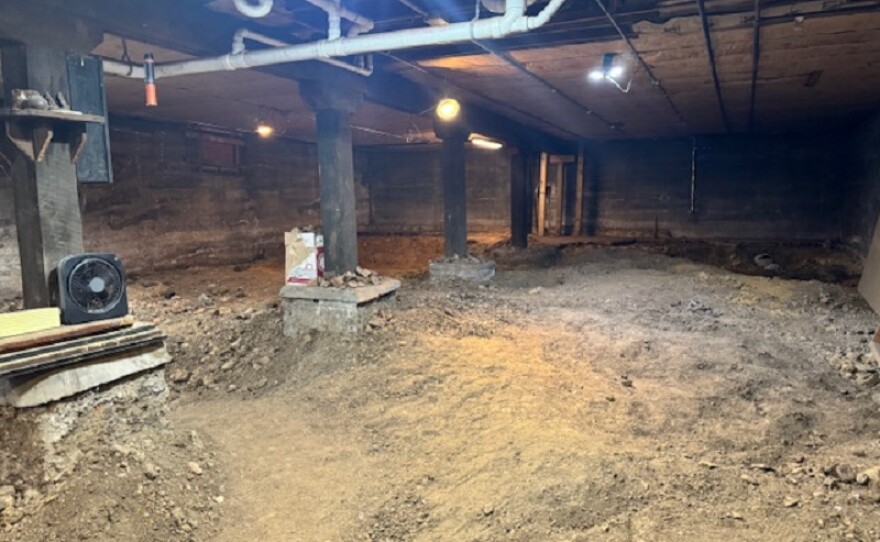
A groundhog digging in the basement of an old building started it all. Patrick Donley, a Louisville artist, had no idea what was hidden underneath his two-story storage building constructed in 1920 on Mary Street in the Germantown neighborhood.

Donley bought the property in 1995. He had plans of turning it into a space for artists. But then came the day in 2019, when Donley noticed something was digging up the dirt in the building’s basement.
“I saw this pile of dirt coming out from under a broken piece of slab. And I started looking at it, and there were a couple beer bottles, and I'm like, okay, well, that's just construction trash, you know, they drank when they built the building," Donley said. "But then there was a medicine bottle. And I was like, oh, that's interesting. And then there were some doll parts and some broken plates and a piece of stoneware and lots of broken glass.”
A groundhog, who Donley named Phyllis, had led him to a life-changing discovery. Donley’s building was sitting on top of a city dump that opened in the early 1870s. For fifty years, until its closing in 1919, people dumped their broken and unwanted stuff in the dump on Mary Street.

When the storage building was finished over the dump, all the discarded parts of people’s lives disappeared from sight, a forgotten part of Germantown’s history. Who could have predicted that almost a century later, a groundhog would lead to all that trash, turned into one man’s treasure.
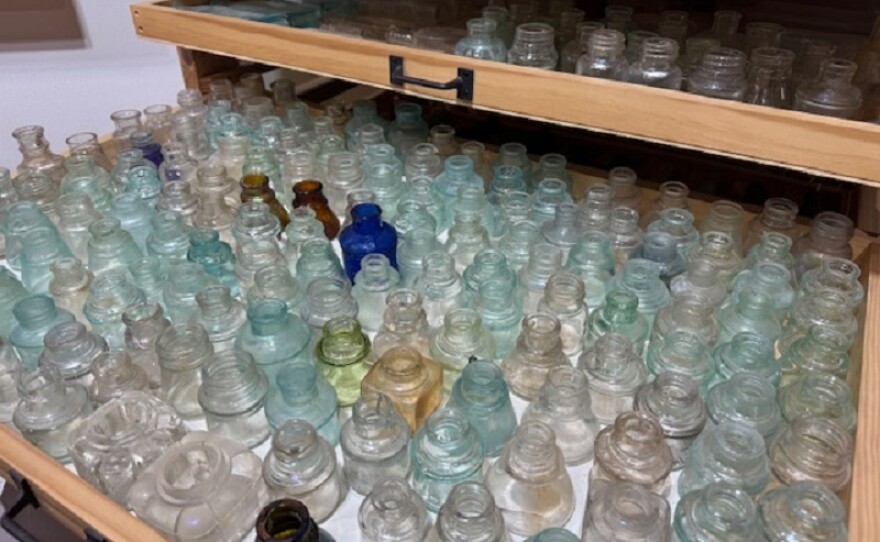
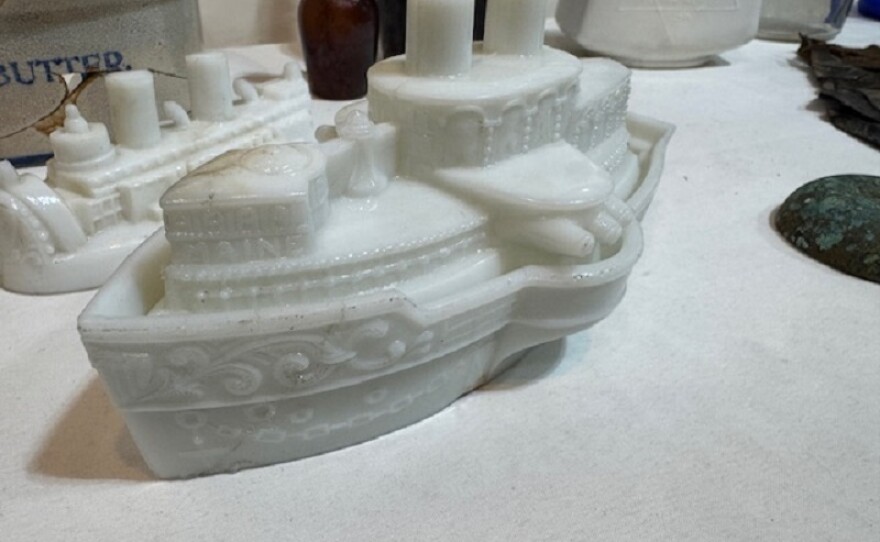
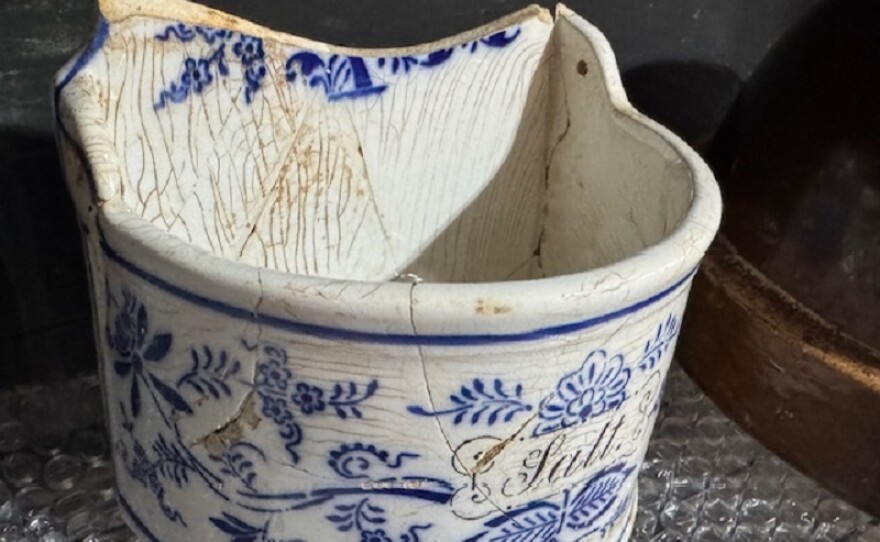
Donley began digging in the building’s basement. It became an obsession as he unearthed more and more things. Pieces of fine china, parts of dolls made of porcelain, holy water fonts, stoneware for storing food, inkwell glass bottles, and hand-crafted medicine bottles. Thousands of items from people who lived nearby more than a century ago.
When COVID hit, Donley and Phyllis, the groundhog, were immersed in digging, isolated like many people at that time. That’s when their discoveries attracted worldwide attention.

“I was posting on social media and developed a huge following on Instagram that became global because I connected with the phenomenon of mudlarking. So, through the use of hashtags, I would hashtag my posts, mudlarking finds. And suddenly, I had followers in England who were amazed by what I was digging out from underneath the floor of my basement," Donley said. "I have followers in Russia, in Germany, in Japan. And so, it's become kind of a global phenomenon, this groundhog thing. But people started asking me, who had been following me for a while, What are you going to do with all this stuff? And I honestly said, I don't know.”
The excavation became the Mary Street Midden Project. Midden is a fancy term for trash, only this “trash” is headed for a museum. Donley has plans to turn his ugly storage building and all its treasures into a welcoming museum.
“We want to create a facade that you are drawn to. We are going to configure glass and windows on the front that defy your expectations of what this building is say, today when you look at it. It's kind of a scary stucco barn, and we want to transform it into a light-filled space that is more of a transformative experience. It's not going to be a dusty bottle museum; it is going to be displays that are illuminated in ways that are unexpected,” he said.

As for Phyllis, who eventually disappeared, Donley is not forgetting her contribution.
“This is not about me, and it never has been. It's really about Phyllis, and it's about the history and these objects and the stories that they tell, the people who made them, the people who used them. And hopefully it's going to be about you, the people who discover them through what we create, and that you'll learn something and take something and take something valuable away.”
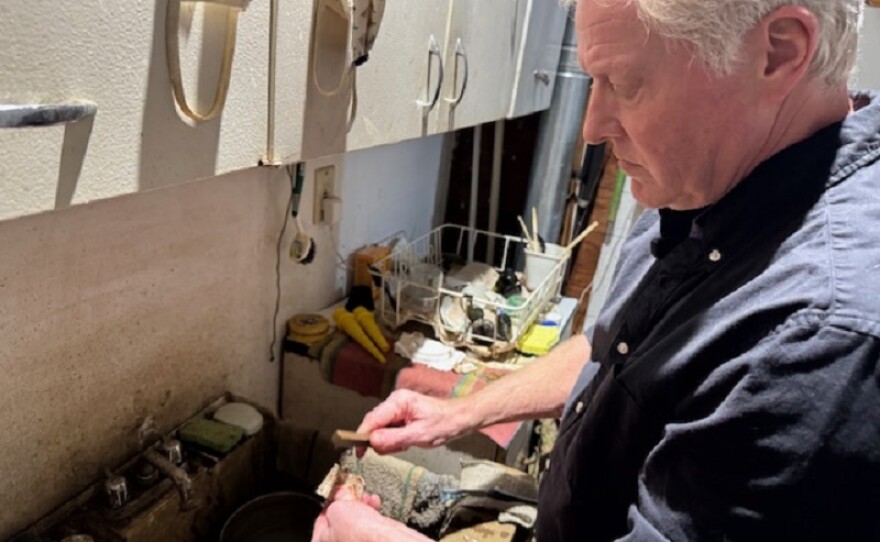
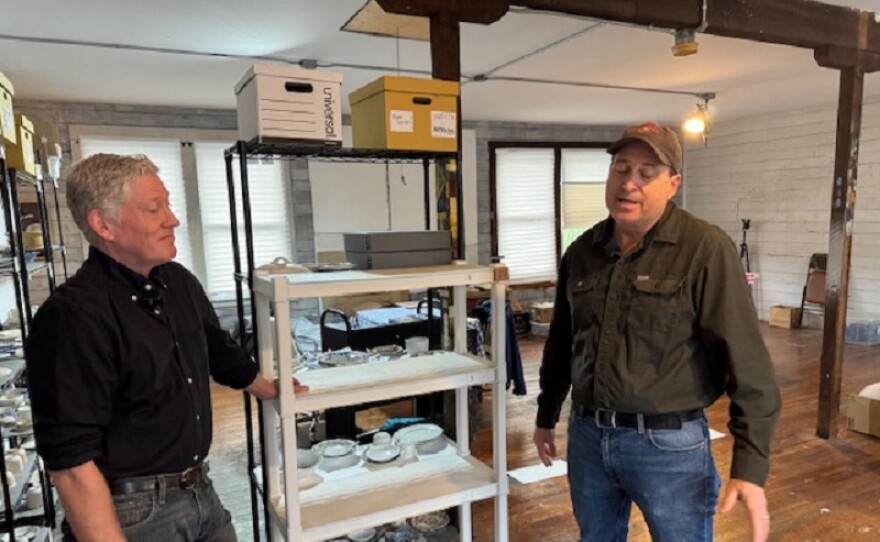
Donley has painstakingly cleaned, organized, and documented every piece, some as tiny as a fingernail. He’s slowly piecing together the items. That level of organization has drawn high praise from a neighbor who lives a few blocks away. Jay Stottman is the Assistant Director of the Kentucky Archaeological Survey and has toured the dig site.

“I walked through the door, and I was blown away about what I saw. All these objects being meticulously pieced back together. I really didn't know what to think. So, we sat down and talked with Patrick and his volunteers, and he showed me around, and I was just blown away, because this is exactly the kind of time period that I study. All I could think about was like, Wow, the information that's here that could be used by archaeologists and researchers, and lots of people. There's got to be a way to make this, this kind of information available. And we found out that Patrick was well on his way to doing that.”
Donley has a board of advisors and is working on making his project a non-profit. He’s fundraising as he wraps up the end of all the digging that’s gone six feet deep. It’s a new journey for Donley in his early sixties.
“There's an online magazine called Next Avenue, and their whole focus is on people in my age range who think they're getting ready to retire, and all of a sudden, life throws down a fork in the road, and they choose that fork, and it forever changes their story. And this is definitely that fork for me.”
For more information, go to the Facebook page for The Mary Street Midden Project.